

Structured Data
Schema markup, or structured data, is the language search engines use to read and understand the content on your pages. This language is a semantic vocabulary (code) that helps search engines characterize and categorize the content of web pages.
Although search engines are very powerful tools using advanced algorithms, they still need help to read, identify, and categorize the content.
Search engines don’t have the same visual and intuitive capabilities as humans. They can’t see a picture, they have to read it. They don’t know the context of the copy. By applying schema markup to your content, you help the search engines understand the meaning of your pages. This helps to not only rank higher in organic search, but provide rich text snippets and a better search experience for your users.
What we see:
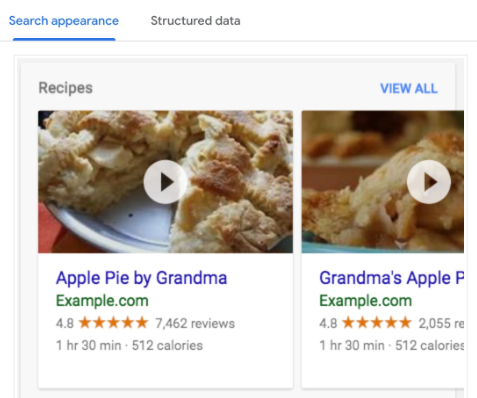
What search engines see:

In today’s digital landscape, optimizing your website for search engines is crucial for providing the best user experience and achieving high search engine rankings.
Factor in constantly evolving algorithms and revised search actions, and AEO, or AI SEO with AI-enhanced search, ensuring that your site is configured for search engines is more important than ever for SEO.
Schema Markup Guide
I created this document to provide instructions for adding schema markup to WordPress websites. It includes the suggested structured data types to select as well as schema “templates” for each type. The templates provide the content, with examples, to use for each required/optional field. To learn more, email me anytime.
<Technical SEO: Schema Instructions> not available
The following deck provides a competitive overview of SERP action, with the top competitors results compared.
Core Web Vitals (Technical SEO)
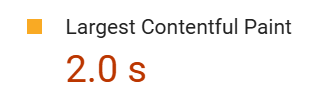
Additional technical SEO components include Largest Contentful Paint (LCP), Cumulative Layout Shift (CLS), and Total Blocking Time (Google recently changed this metric). These metrics all account for general search engine score and ranking.

Red results indicate problems or opportunities for improvements. Green indicate acceptable results.
Definitions:
Largest Contentful Paint
Time it takes for the page to load
Cumulative Layout Shift
How stable the elements on the page are

Total Blocking Time
How long people had to wait after the page loaded before they could click something

If the website is intended to be uses as a growth channel, then it is crucial to monitor and improve your website’s technical performance. A free resource is Page Speed Insights. This tool allows you to monitor performance, view opportunities for improvements on your site, with instructions on how to fix.
Enhancing website technical SEO is a vital step to improve search engine rankings, organic search, and search engine marketing. It doesn’t matter how great your content is if Google won’t crawl your site and rank it.


SEO for AI
Using AI to enhance your SEO efforts
The latest trend is wanting to optimize your web content for AI – getting picked up by ChatGPT as the AI answer in search results. While there are some things you can do (below), you ultimately have the best chance by optimizing for Google and Bing. If you can rank on those search engines, you have a better chance of being fed into AI answers.
Automate repetitive tasks: AI tools can automate time-consuming tasks like keyword research, competitor analysis, and initial content drafting.
Improve efficiency: AI can help generate content ideas, summarize research, suggest edits, and optimize existing content, making your workflow faster.
Provide data insights: AI can analyze vast amounts of data to understand user behavior, identify trends, and predict search intent more accurately.
Scale content creation: Use generative AI to create first drafts or outlines of content, which can then be refined by human experts.
Optimizing content for AI-powered search
Use conversational language: Write in a natural, conversational style that mimics how users ask questions to AI search tools.
Provide in-depth answers with accurate URL architecture: Structure your content with clear sections, headings, and concise explanations so AI can easily summarize it.
Incorporate FAQs: Add a dedicated FAQ section to articles. This structure helps AI systems pull key information and improves the chances of your content being cited.
Use schema markup: Implement structured data like FAQPage schema to help AI understand the content and its purpose more clearly.
Focus on traditional quality signals: Continue to build expertise, experience, authoritativeness, and trustworthiness (E-E-A-T) into your content, as these are still critical for AI and human searchers.
Do NOT use client-side JavaScript rendering. While Google can handle JavaScript, most LLM crawlers cannot. It is not that they are bad at it – they just do not render it at all.
Prioritize brand mentions over backlinks. Get your brand mentioned in reputable places where you would expect humans doing research expect it. Depending on your industry that might be Wikipedia, CrunchBase, IMDB, reddit, or CNN.
Consider getting a tool like Otterly, Ceel, Knowatoa, Peec, Mangools AI Grader, etc. to monitor your visibility for prompts and LLMs you deem relevant.
Let’s connect!
Interested in learning more about my background, or scheduling a call? Let’s discuss how I can contribute to your organization!


























 Kate Khoury Portfolio